2026 Relocating Family Support Survey: What Today’s Mobility Leaders Need to Know

NetExpat Account • March 2, 2026

For nearly a decade, the Relocating Family Support Survey—developed in partnership between NetExpat and EY—has served as the industry’s most comprehensive benchmark on the experience of relocating partners and families. Since its launch in 2018, the survey has captured insights from more than 4,400 participants worldwide, helping organizations understand the realities facing globally mobile families and the policies that most effectively support them. The 2026 edition builds on this foundation with input from over 340 respondents across 50 countries, offering a timely view into how mobility expectations, workforce demographics, and business priorities continue to evolve.

Key Insights Shaping Global Mobility in 2026 
Partner and Family Well‑Being Drive Assignment Success 

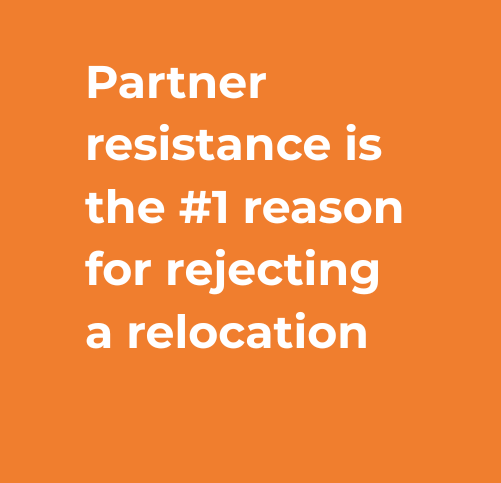
This year’s data reinforces a long‑standing truth: the family experience is inseparable from the employee experience. 69% of participants cited partner resistance as the top reason employees decline a relocation, and 62% identified partner unhappiness as the leading cause of failed assignments. These factors directly affect team continuity, talent pipelines, and business outcomes.

Dual‑Income Support Is No Longer Optional 

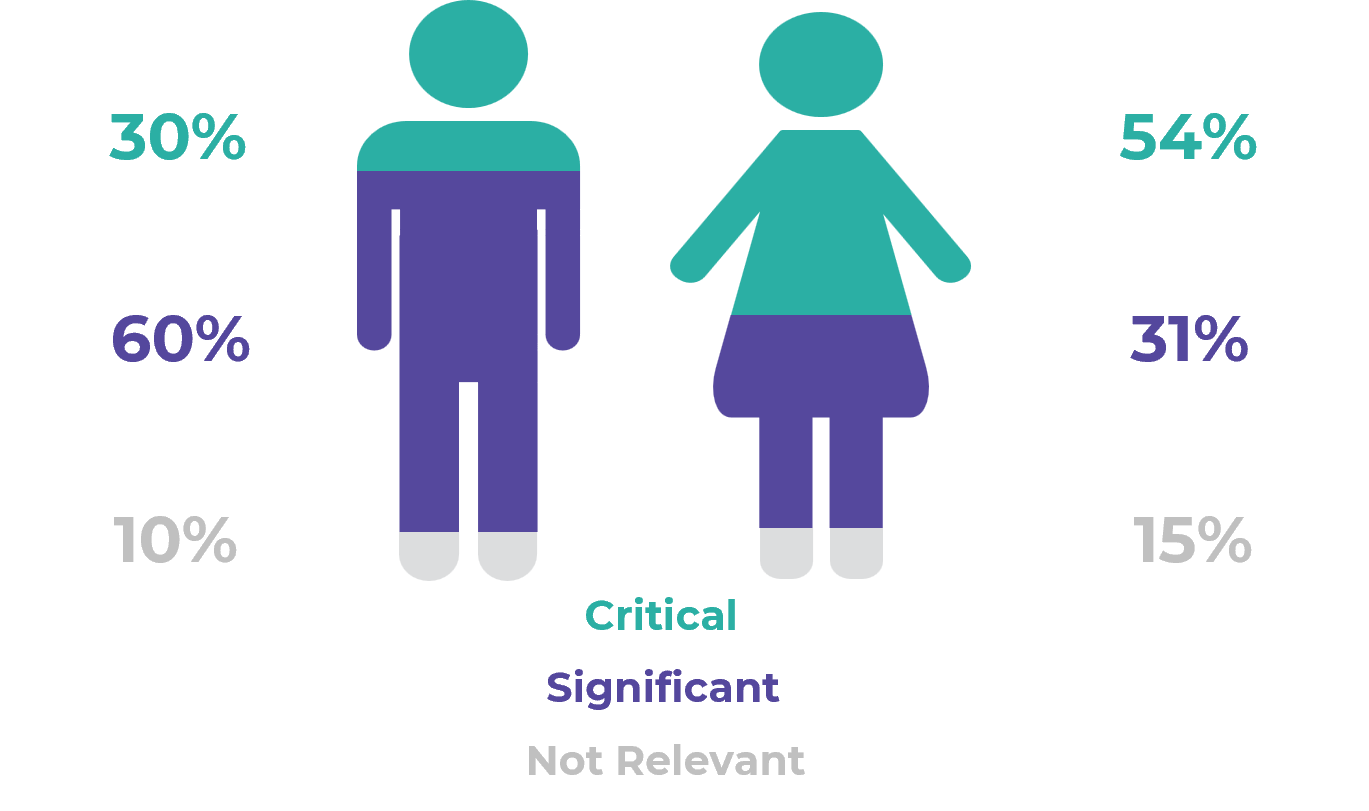
Economic pressures and shifting workforce norms mean more families rely on two incomes during an international assignment. 74% of employees and partners view dual‑income support as critical—a notable increase from 69% in 2018. Needs vary by gender and generation, but the message is clear: mobility programs must evolve to support diverse career paths and financial realities.

Partner Support Strengthens Employer Brand 

In a competitive talent market, mobility programs are a differentiator. 81% of survey participants believe that supporting accompanying partners and spouses strengthens an employer’s mobility brand and broader business reputation. These programs are no longer discretionary—they are strategic levers for attraction, retention, and long‑term workforce sustainability.

Communication Gaps Undermine Program Impact 

While most companies offer partner and family support, only half of respondents feel these services are effectively communicated. This disconnect suggests that even strong programs can fall short if employees and families don’t understand what’s available or how to access it. Clearer messaging, proactive outreach, and consistent touchpoints are essential.


Technology Enhances, But Cannot Replace Human Support 

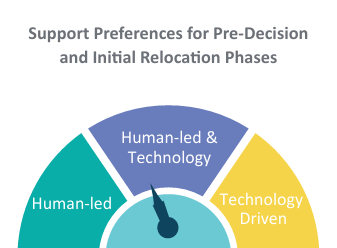
Across all respondent groups, there was unanimous agreement: the most effective mobility experience blends digital tools with human‑led support. Not a single participant preferred a tech‑only model. Human guidance is especially valued during pre‑decision and early relocation phases, when emotions and complexity are highest.


Care Outweighs Cash 

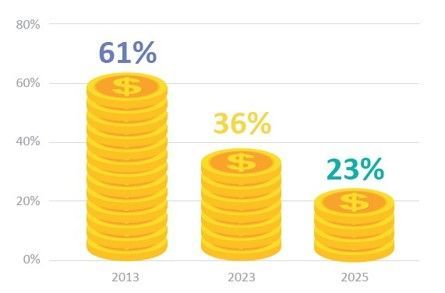
Only 23% of organizations now offer cash allowances for partner or family support—a steep decline from previous years. Instead, companies are investing in personalized, needs‑based services such as intercultural training, career coaching, integration support, and language instruction. These offerings deliver structure, clarity, and meaningful impact for families navigating transition.

What This Means for Mobility and Talent Leaders

The 2026 findings point to a clear industry shift: organizations are moving toward mobility strategies that prioritize family well‑being, intentional spending, and long‑term talent sustainability. With 95% of companies now offering partner/family support, the next frontier is ensuring these programs are accessible, visible, and aligned with the lived experiences of globally mobile families.
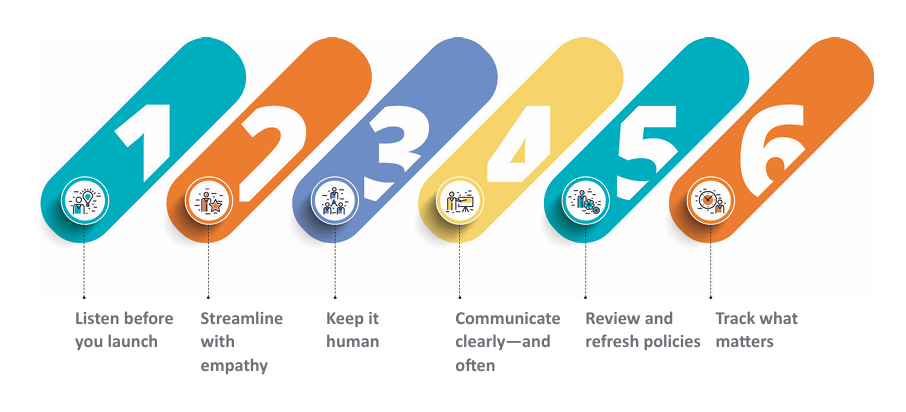
For HR and mobility leaders, this is a pivotal moment to: 


  • Reassess whether current policies reflect the realities of dual‑career households 
  • Strengthen communication channels so support is understood, not just offered 
  • Blend technology with empathetic, human‑centered guidance 
  • Extend support beyond arrival, especially through repatriation 
  • Benchmark against industry peers to stay competitive in a rapidly evolving landscape 


Explore the Full 2026 Report

The complete 2026 Relocating Family Support Survey offers deeper data, demographic insights, and practical recommendations for strengthening mobility programs in 2026 and beyond.

DOWNLOAD THE FULL REPORT

Discover the most comprehensive insights on the impact of global mobility on spouses, partners, and families. Conducted by EY and NetExpat, this survey delves deep into the trends and lessons vital for shaping effective global mobility and talent management strategies. View more information here or contact rfs@netexpat.com with further questions.

Share this post

By NetExpat Account February 9, 2026
Anu brings over seven years of experience in Learning & Development and Human Resources, shaping her career around helping people grow, adapt, and thrive. Her early passion for psychometrics, talent management, and capability‑building led her into the HR solutions space, where she deepened her expertise in behavioral insights and learning strategy before stepping into her role as Senior Manager, Advisory Services – India at NetExpat. Today, she supports Indian talent navigating global mobility and intercultural transitions, energized by daily conversations with individuals from around the world and inspired by the continuous learning that comes from working with a truly global team.
By NetExpat Account February 4, 2026
When it comes to global talent mobility, agility is crucial to an organization’s long-term strategy and competitiveness. With mounting pressure to deliver seamless employee experiences—while managing cost, compliance, and cultural complexity—the question isn’t just what to outsource, but also what to own and automate to stay relevant and scalable over time.  This post explores how companies can align operational choices with their internal capacity, cultural context, and long-term goals. The right balance is unique to each organization’s talent and operational needs.
By NetExpat Account January 19, 2026
Des brings over 25 years of global mobility expertise, beginning with guiding people through the life-changing decision of buying and selling homes before moving into relocation in 1990. His passion lies in building impactful, human-centered mobility solutions, shaped by personal relocation experiences and lessons in cultural awareness. At NetExpat, he thrives on the intrapreneurial energy of a global team that feels like a “27-year-old start-up,” inspired daily by colleagues’ talent and dedication. Motivated by the chance to create sustainable solutions that truly make a difference for individuals, families, and organizations, Des envisions mobility evolving into a strategic, end-to-end resource that elevates the human experience.
By Laurette Bennhold-Samaan January 15, 2026
When organizations support mobile employees during an intercultural assignment, they benefit long after those same individuals repatriate. The trouble is, too many businesses don’t see repatriation as a component of the assignment, which can have negative outcomes for both them and the employees they’ve invested in: Without repatriation support, employees face a myriad of challenges, from reverse culture shock and career uncertainty to feeling diminished. Businesses end up paying the price, from employees being disengaged to losing talent altogether. Both have negative impacts on a company’s ROI.
January 6, 2026
Leadership styles vary widely across cultures—and when global teams work together, those differences can quietly shape everything from decision-making to team morale. What feels like clarity to one supervisor may feel like micromanagement to an employee from another culture. Respectful silence meant by one team member may be misread as disengagement by a leader with different cultural values and expectations. These mismatches aren’t about competence or intention—they’re about interpretation. And without cultural understanding, even high-performing teams can struggle. Training your workforce to navigate diverse leadership styles—to develop intercultural agility— is more than a soft skill. It’s a strategic investment. Employees need support to adapt to unfamiliar supervisory approaches. Leaders need coaching to flex their style in varying cultural environments. And organizations need expert partners who understand the hidden dynamics at play. Organizations that foster culturally agile teams build resilience and adaptability across diverse workforces. In addition to cultivating mutual understanding, they facilitate bridging gaps between leaders and their teams by encouraging open communication and flexible leadership approaches. This foundation further supports team collaboration, productivity, and innovation.
By NetExpat Account December 3, 2025
Tracy brings her passion for people, coaching, and consultative sales to NetExpat. With a background in business psychology and years of experience guiding individuals and teams, she thrives on building client relationships and supporting growth. Tracy values NetExpat’s culture of equality, collaboration, and respect, where every voice matters. Motivated by making a genuine impact, she envisions global mobility becoming increasingly diverse, strategic, and human‑centered in the years ahead.
By NetExpat Account November 19, 2025
At NetExpat, we believe that global mobility is more than logistics, it’s about people, families, and the human experience of moving across borders. That’s why we launched the Global Care Awards to honor the organizations who go above and beyond to support mobile talent with care, inclusion, and strategic vision.
By NetExpat Account November 17, 2025
What if your AI tools are unintentionally costing you great hires, damaging team morale, or shrinking your global reach? Cultural bias in AI happens when technology reflects the norms and assumptions of the culture it was built in. That means even the smartest algorithms can struggle to interpret behaviors or communication styles that differ from the data they were designed and trained on. The result? Missed opportunities, disengaged teams, and tech that undermines—rather than supports—your global strategy. In today’s interconnected workplaces, understanding and addressing cultural biases is ethical, but it’s also about business resilience and growth. This blog post offers a clear, practical overview of where these biases show up and how you can build AI systems that truly support diverse teams and markets, along with business sustainability and growth.
By NetExpat Account November 12, 2025
Interview with an Accompanying Partner
November 6, 2025
Today’s global hiring landscape is complex. A candidate’s ability to succeed isn’t just about their qualifications; it’s about whether they can thrive in a new geographic, cultural, and/or corporate environment. Too often, companies assume preparing for success starts at the onboarding phase, but, in reality, the most crucial hiring decisions happen much earlier—during the pre-decision phase. Why does this matter? Because hiring the right talent isn’t just about filling a role; it’s about ensuring long-term success. Without assessing readiness factors early, companies risk costly misplacements, cultural mismatches, and logistical hurdles that could have been avoided. This is where internal mobility and talent acquisition teams can align and collaborate to transform hiring into a truly strategic process – one that ensures the right talent is selected, supported, and set up for success.
Show More