DIVERSITY & INCLUSION - LGBTQ EXPATS

Harro Lauprecht • July 16, 2021

The prospect of moving to another country for the job of your dreams can be a very exciting prospect.  There are many things to consider like job culture, housing, meeting new people, but how about the issue of diversity and inclusion? Many of us when moving to a new country are worried that our new home may not accept us for who we truly are. 


Let’s explore diversity and inclusion 

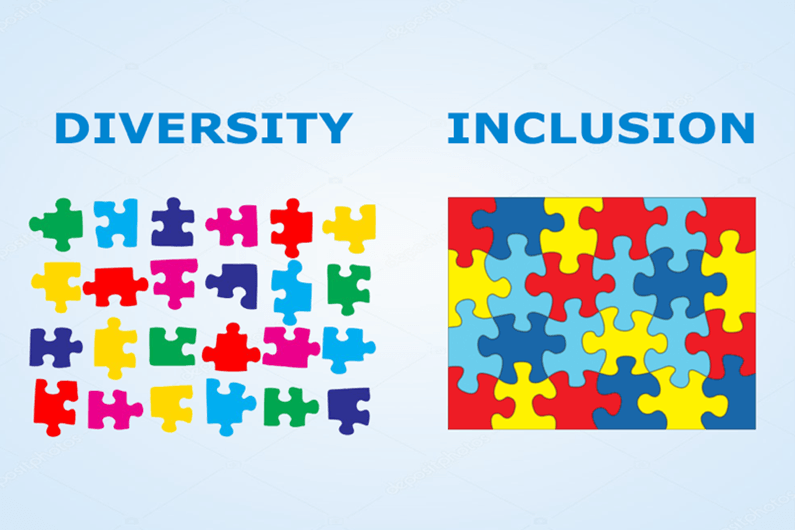
Diversity incorporates all of the elements that make individuals unique from one another, and while there are infinite differences in humans, most of us subconsciously define diversity by a few social categories, such as gender, race, age and so forth.  Although often used in tandem with diversity, inclusion is a concept of its own. Inclusion can be defined as the achievement of a society or culture (either societal or work) in which all individuals are treated fairly and respectfully, have equal access to opportunities and resources, and can contribute fully to society’s activities.


In summary, diversity refers to the traits and characteristics that make people unique while inclusion refers to the behaviors and social norms that ensure people feel welcome.


Global mobility is innately an advocate for diversity. We move people all over the world to increase business intelligence, global mindsets, and diversity of thought. We encourage and advocate for cultural competence when we send expats to a foreign country. Not only is inclusivity crucial for diversity efforts to succeed but creating an inclusive culture will prove beneficial for employee engagement and productivity.


An organization is diverse when it encompasses all aspects of the employees from age, gender, ethnicity, sexual orientation, family status, and background. However, an organization is also inclusive when minority groups really participate in the decision-making process and contribute to breaking the career glass ceiling. Diversity without inclusion is meaningless. To quote the Prime Minister of Canada Justin Trudeau : “Our commitment to diversity and inclusion isn’t about Canadians being nice and polite—though of course we are. In fact, this commitment is a powerful and ambitious approach to making Canada, and the world, a better, and safer place.”


Although there are many documented benefits from a diverse and inclusive workforce, too many countries and companies still have discriminatory laws and policies against groups with different abilities, race, gender, sexual orientation and expression, etc.  “Don’t ask, don’t tell” policies make it difficult to uncover important information that can benefit all parties from a meaningful and fruitful engagement. Lack of information makes it more complicated to address issues. We often see that resources for expats with disabilities are limited.  62% have an invisible disability. That means they go through their day-to-day work lives without revealing what disability may be impacting them physically, emotionally, and mentally. (Rosen, P. Understanding invisible disabilities in the workplace)

LGBTQ expats and international opportunities.

Some LGBTQ employees are restricted from enjoying prosperous international careers, with many countries being unsafe or unfriendly for LGBTQ people, and limited organisational support creating barriers to working overseas. In 13 countries, being gay or bisexual is punishable by death, prison or hefty fines. 


In 17 countries, bans are in place to prohibit 'propaganda' interpreted as promoting LGBT communities or identities. Surprisingly, about 40 countries retain a 'gay panic' clause which can be used as a defense for people who commit crimes such as assault or murder that they were provoked because the person was gay, lesbian or bisexual.


However, it is important to recognize that as of 2021, there are 29 countries that not only protect LGBT rights, but also have legalized same-sex marriage. Some of these countries include Argentina, Australia, Austria, Belgium, Brazil, Canada, Costa Rica, Denmark, Finland, France, Germany, Ireland, Luxembourg, Mexico, Netherlands, New Zealand, Norway, Portugal, South Africa, Spain, Sweden, Taiwan, United Kingdom and United States. For a complete list visit: https://en.wikipedia.org/wiki/Same-sex_marriage

Social climate vs. Legal frame

Social climate, described as the ‘comfort factor’, tends be most important to an LGBTQ expatriate when choosing their work destination. A country’s cultural climate is considered to be more important than the relevant legal framework. Even though an individual may be legally protected in a particular country, that doesn´t imply that people may not still be a little squeamish about gay people or lesbians or transgender.  Societal positive attitude and acceptance of LGBT is what determines the “comfort factor.” While legal, safety and security factors can be ascertained through publicly available information, the ‘comfort factor’ will usually be determined through the gathering of information from LGBTQ networks and from organisational resources, where provided.

Here are some recommendations for members of the LGBTQ community when deciding to take an assignment abroad.


  1. Research possible problems and conflicts before a longer stay abroad and prepare yourself for the new country and its culture.
  2. Reflect carefully, and understand yourself, your needs and your context. Are you able to adapt to the cultural norms of your host country?
  3. Take some time to educate yourself on the laws & cultures of the country that you may be relocating to, talk to your Human Resources department.
  4. Conduct a risk-benefit analysis of coming out at work.
  5. Here are some international LGBTQ resources online that you may find helpful to learn more about your new host country and/or geographic area:
  • ILGA – The International Lesbian, Gay, Bisexual, Trans and Intersex Association offers information on over 110 countries and offers a country-by-country survey of the legal position of LGBTQ individuals.
  • OutRight Action International - OutRight Action International (formerly known as IGLHRC, the International Gay and Lesbian Human Rights Commission) is dedicated to human rights advocacy on behalf of people who experience discrimination or abuse on the basis of their actual or perceived sexual orientation, gender identity or expression.
  • Human Rights Watch: Lesbian, Gay, Bisexual, Transgender Rights - Human Rights Watch is a nonprofit, nongovernmental human rights organization made up of more than 280 staff members around the globe.
  • It Gets Better - The It Gets Better Project was created to show young LGBT people around the globe the levels of happiness, potential, and positivity their lives will reach – if they can just get through their teen years. The It Gets Better Project wants to remind teenagers in the LGBT community that they are not alone — and it WILL get better.
  •  The World Professional Association for Transgender Health (WPATH) - An international multidisciplinary professional Association dedicated to promoting evidence-based care, education, research, advocacy, public policy and respect in transgender health.


Tell us Your Story

We would love to hear from your experiences with Diversity and Inclusion in your workplace. We can call learn from each other and support each other.

Share this post

By NetExpat Account March 6, 2026
Sam combines a bilingual, multicultural upbringing with deep global mobility experience. Born in Belgium to a British father and Belgian mother, she began her career in education—later moving into consultancy and, in 2003, into international mobility. At NetExpat since 2009, Sam blends operational excellence with advisory insight, working directly with clients and assignees to design people‑centered solutions. She thrives on building trusted relationships across cultures and supporting family wellbeing, partner careers, and sustainable assignments. Her practical, empathetic approach turns complex mobility challenges into positive outcomes for organizations and the people they move.
By NetExpat Account March 6, 2026
Insights from Adeline Ong on how KPMG prioritizes repatriation.
By NetExpat Account March 2, 2026
For nearly a decade, the Relocating Family Support Survey —developed in partnership between NetExpat and EY—has served as the industry’s most comprehensive benchmark on the experience of relocating partners and families. Since its launch in 2018, the survey has captured insights from more than 4,400 participants worldwide, helping organizations understand the realities facing globally mobile families and the policies that most effectively support them. The 2026 edition builds on this foundation with input from over 340 respondents across 50 countries, offering a timely view into how mobility expectations, workforce demographics, and business priorities continue to evolve.
By NetExpat Account February 9, 2026
Anu brings over seven years of experience in Learning & Development and Human Resources, shaping her career around helping people grow, adapt, and thrive. Her early passion for psychometrics, talent management, and capability‑building led her into the HR solutions space, where she deepened her expertise in behavioral insights and learning strategy before stepping into her role as Senior Manager, Advisory Services – India at NetExpat. Today, she supports Indian talent navigating global mobility and intercultural transitions, energized by daily conversations with individuals from around the world and inspired by the continuous learning that comes from working with a truly global team.
By NetExpat Account February 4, 2026
When it comes to global talent mobility, agility is crucial to an organization’s long-term strategy and competitiveness. With mounting pressure to deliver seamless employee experiences—while managing cost, compliance, and cultural complexity—the question isn’t just what to outsource, but also what to own and automate to stay relevant and scalable over time.  This post explores how companies can align operational choices with their internal capacity, cultural context, and long-term goals. The right balance is unique to each organization’s talent and operational needs.
By NetExpat Account January 19, 2026
Des brings over 25 years of global mobility expertise, beginning with guiding people through the life-changing decision of buying and selling homes before moving into relocation in 1990. His passion lies in building impactful, human-centered mobility solutions, shaped by personal relocation experiences and lessons in cultural awareness. At NetExpat, he thrives on the intrapreneurial energy of a global team that feels like a “27-year-old start-up,” inspired daily by colleagues’ talent and dedication. Motivated by the chance to create sustainable solutions that truly make a difference for individuals, families, and organizations, Des envisions mobility evolving into a strategic, end-to-end resource that elevates the human experience.
By Laurette Bennhold-Samaan January 15, 2026
When organizations support mobile employees during an intercultural assignment, they benefit long after those same individuals repatriate. The trouble is, too many businesses don’t see repatriation as a component of the assignment, which can have negative outcomes for both them and the employees they’ve invested in: Without repatriation support, employees face a myriad of challenges, from reverse culture shock and career uncertainty to feeling diminished. Businesses end up paying the price, from employees being disengaged to losing talent altogether. Both have negative impacts on a company’s ROI.
January 6, 2026
Leadership styles vary widely across cultures—and when global teams work together, those differences can quietly shape everything from decision-making to team morale. What feels like clarity to one supervisor may feel like micromanagement to an employee from another culture. Respectful silence meant by one team member may be misread as disengagement by a leader with different cultural values and expectations. These mismatches aren’t about competence or intention—they’re about interpretation. And without cultural understanding, even high-performing teams can struggle. Training your workforce to navigate diverse leadership styles—to develop intercultural agility— is more than a soft skill. It’s a strategic investment. Employees need support to adapt to unfamiliar supervisory approaches. Leaders need coaching to flex their style in varying cultural environments. And organizations need expert partners who understand the hidden dynamics at play. Organizations that foster culturally agile teams build resilience and adaptability across diverse workforces. In addition to cultivating mutual understanding, they facilitate bridging gaps between leaders and their teams by encouraging open communication and flexible leadership approaches. This foundation further supports team collaboration, productivity, and innovation.
By NetExpat Account December 3, 2025
Tracy brings her passion for people, coaching, and consultative sales to NetExpat. With a background in business psychology and years of experience guiding individuals and teams, she thrives on building client relationships and supporting growth. Tracy values NetExpat’s culture of equality, collaboration, and respect, where every voice matters. Motivated by making a genuine impact, she envisions global mobility becoming increasingly diverse, strategic, and human‑centered in the years ahead.
By NetExpat Account November 19, 2025
At NetExpat, we believe that global mobility is more than logistics, it’s about people, families, and the human experience of moving across borders. That’s why we launched the Global Care Awards to honor the organizations who go above and beyond to support mobile talent with care, inclusion, and strategic vision.
Show More