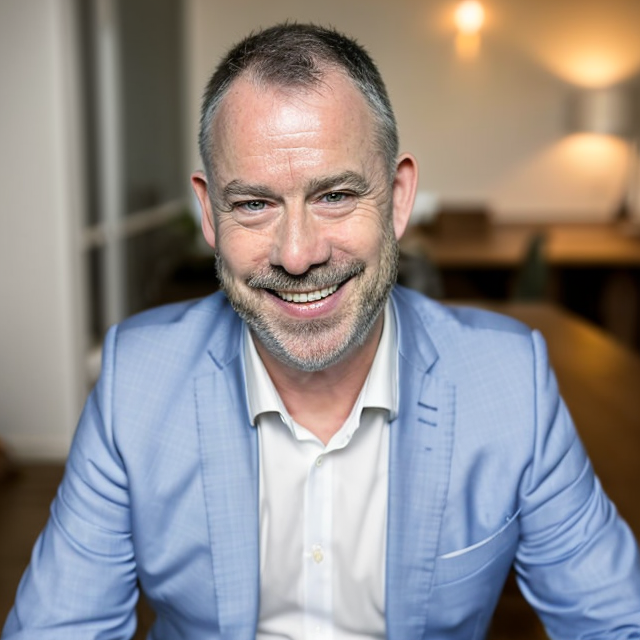
Team Spotlight: Des McKell

NetExpat Account • January 19, 2026

Des brings over 25 years of global mobility expertise, beginning with guiding people through the life-changing decision of buying and selling homes before moving into relocation in 1990. His passion lies in building impactful, human-centered mobility solutions, shaped by personal relocation experiences and lessons in cultural awareness. At NetExpat, he thrives on the intrapreneurial energy of a global team that feels like a “27-year-old start-up,” inspired daily by colleagues’ talent and dedication. Motivated by the chance to create sustainable solutions that truly make a difference for individuals, families, and organizations, Des envisions mobility evolving into a strategic, end-to-end resource that elevates the human experience.

Tell us a little bit about your journey before joining NetExpat.

My career began many years ago helping people with the largest financial decision in their life- buying and selling a home. I often reflect on this experience as having given me a firm understanding of what customer service and experience were all about. I began to encounter customers who were "relocating" and took the decision to join this exciting new industry (in 1990!). During 25+ years working within the RMC sector, my passion became supporting clients to build and deliver compelling mobility solutions for their talent. Personal relocation experiences and a business trip to Sweden (whilst at an RMC) where I completely misjudged the importance of cultural awareness really resonated with me the importance of what we deliver at NetExpat. Over the years I've learnt many times that we have 2 ears and one mouth for a reason. Ask insightful questions, listen to understand, and seek clarity. Essential ingredients in supporting clients to the maximum.

What energizes you most about your day-to-day work at NetExpat?


The intrapreneurial spirit and energy are infectious and empowering. As an agile organisation, we adapt and take action every day, and the whole global team is encouraged to stimulate new ideas and thinking. We feel like a 27-year-old start up!

What do you love most about being part of the NetExpat team or culture?


Our global colleagues are the secret sauce of NetExpat and we are so lucky to have such a talented group of individuals, all with a true passion for our mission. 


What motivates you in your role?


Helping build sustainable and impactful solutions. What we deliver is truly experiential and seeing the difference it makes to the individuals and families we support is so fulfilling. We are solving complex talent challenges, and our support is tangible in helping our clients to attract, retain, and develop their talent. 

What do you love most about being part of the NetExpat team or culture?


Our global colleagues are the secret sauce of NetExpat and we are so lucky to have such a talented group of individuals, all with a true passion for our mission. 


What motivates you in your role?


Helping build sustainable and impactful solutions. What we deliver is truly experiential and seeing the difference it makes to the individuals and families we support is so fulfilling. We are solving complex talent challenges, and our support is tangible in helping our clients to attract, retain, and develop their talent. 

Share this post

By Laurette Bennhold-Samaan January 15, 2026
When organizations support mobile employees during an intercultural assignment, they benefit long after those same individuals repatriate. The trouble is, too many businesses don’t see repatriation as a component of the assignment, which can have negative outcomes for both them and the employees they’ve invested in: Without repatriation support, employees face a myriad of challenges, from reverse culture shock and career uncertainty to feeling diminished. Businesses end up paying the price, from employees being disengaged to losing talent altogether. Both have negative impacts on a company’s ROI.
January 6, 2026
Leadership styles vary widely across cultures—and when global teams work together, those differences can quietly shape everything from decision-making to team morale. What feels like clarity to one supervisor may feel like micromanagement to an employee from another culture. Respectful silence meant by one team member may be misread as disengagement by a leader with different cultural values and expectations. These mismatches aren’t about competence or intention—they’re about interpretation. And without cultural understanding, even high-performing teams can struggle. Training your workforce to navigate diverse leadership styles—to develop intercultural agility— is more than a soft skill. It’s a strategic investment. Employees need support to adapt to unfamiliar supervisory approaches. Leaders need coaching to flex their style in varying cultural environments. And organizations need expert partners who understand the hidden dynamics at play. Organizations that foster culturally agile teams build resilience and adaptability across diverse workforces. In addition to cultivating mutual understanding, they facilitate bridging gaps between leaders and their teams by encouraging open communication and flexible leadership approaches. This foundation further supports team collaboration, productivity, and innovation.
By NetExpat Account December 3, 2025
Tracy brings her passion for people, coaching, and consultative sales to NetExpat. With a background in business psychology and years of experience guiding individuals and teams, she thrives on building client relationships and supporting growth. Tracy values NetExpat’s culture of equality, collaboration, and respect, where every voice matters. Motivated by making a genuine impact, she envisions global mobility becoming increasingly diverse, strategic, and human‑centered in the years ahead.
By NetExpat Account November 19, 2025
At NetExpat, we believe that global mobility is more than logistics, it’s about people, families, and the human experience of moving across borders. That’s why we launched the Global Care Awards to honor the organizations who go above and beyond to support mobile talent with care, inclusion, and strategic vision.
By NetExpat Account November 17, 2025
What if your AI tools are unintentionally costing you great hires, damaging team morale, or shrinking your global reach? Cultural bias in AI happens when technology reflects the norms and assumptions of the culture it was built in. That means even the smartest algorithms can struggle to interpret behaviors or communication styles that differ from the data they were designed and trained on. The result? Missed opportunities, disengaged teams, and tech that undermines—rather than supports—your global strategy. In today’s interconnected workplaces, understanding and addressing cultural biases is ethical, but it’s also about business resilience and growth. This blog post offers a clear, practical overview of where these biases show up and how you can build AI systems that truly support diverse teams and markets, along with business sustainability and growth.
By NetExpat Account November 12, 2025
Interview with an Accompanying Partner
November 6, 2025
Today’s global hiring landscape is complex. A candidate’s ability to succeed isn’t just about their qualifications; it’s about whether they can thrive in a new geographic, cultural, and/or corporate environment. Too often, companies assume preparing for success starts at the onboarding phase, but, in reality, the most crucial hiring decisions happen much earlier—during the pre-decision phase. Why does this matter? Because hiring the right talent isn’t just about filling a role; it’s about ensuring long-term success. Without assessing readiness factors early, companies risk costly misplacements, cultural mismatches, and logistical hurdles that could have been avoided. This is where internal mobility and talent acquisition teams can align and collaborate to transform hiring into a truly strategic process – one that ensures the right talent is selected, supported, and set up for success.
By NetExpat Account October 22, 2025
When organizations outsource business functions to another country—whether it’s accounting, customer service, or tech support—they’re often hoping for a streamlined, cost-effective solution. But when intercultural differences aren’t factored into the strategy, the shift often results in the exact opposite: misaligned expectations, breakdowns in communication, and friction across internal teams. Time is lost, along with trust, satisfaction ratings, and even clients. Too often, stakeholders don’t even know why. When internal teams find themselves working across cultures, misunderstandings are common. The definition of “good service” in one country may feel intrusive or inadequate in another. Perceptions of hierarchy and respect vary widely, leading to unintentional offenses. And communication styles are so nuanced that even simple messages can be misread—causing delays, confusion, and strained relationships. Internally, employee engagement and productivity suffer. Clients may notice the shift too—especially in customer-facing functions. Intercultural agility is the solution.
By NetExpat Account October 13, 2025
Leadership wants metrics, but they also need clarity. When you see a business need or opportunity, building the right business case with data is the way to give that to them. It’s also the best way for you to get buy-in. This blog post will discuss how to use data to strengthen business cases and the role of business storytelling in securing buy-in.
By NetExpat Account September 29, 2025
International relocations are a big adjustment for employees, but they can be an even bigger adjustment for their accompanying spouses or partners. This is especially true if they were a part of a dual income household in their country of origin. While organizations often focus on logistical support for the employee, the success of an international assignment hinges equally on the well-being of the entire family. If a relocating partner struggles to integrate, it can have negative impacts on the partner’s state of mind, the couple’s relationship, the employee’s ability to focus on their new role, and both assignment and organizational objectives.
Show More