4 WAYS MOBILITY IS CHANGING NOW AND IN THE FUTURE

The Great Resignation was both a symptom - and evidence - of the world’s changing views on the way we live and work. And the evolution isn’t limited to Millennials; while employees of every age are seeking deeper meaning in their lives and a greater work-life balance, organizations are wondering how to position themselves for growth, while adapting to rapidly changing global trends and technological advancement. What does it all mean for companies that want to be successful now and scale for the future? They’ll need to change and clarify their definition of mobility, making it a strategic partner in their overall talent management programs and business goals.
4 Ways Mobility is Changing
In a recent Global HR Think Tank webinar, NetExpat spoke with International Experiences Director, Louise Brailsford and Mark Nieuwendijk, Global Mobility Director of Danone, to discuss workforce management, ways mobility be a strategic partner to businesses, and why it’s important to consider mobility an investment, rather than a budget line item. Key takeaways included:
List of services
-
Total Mobility vs. Global Mobility:List Item 1
While the number of expats, by ‘traditional’ definition, is
decreasing, we’ve seen an increased number of non-mobile employees who would like to move abroad, remote work scenarios, cross-border commuters and business travelers. Meanwhile, government regulations related to ways of working continue to evolve and differ from country to country, making it difficult for businesses to keep up. The good news is, mobility professionals are already positioned to help businesses stay compliant, deploy global talent strategically, and track and align related expenses and outcomes. This expanded scope — from global mobility to total mobility — means the mobility function can be a valuable partner in overall business strategy,
resulting in both a greater return on total mobility and alignment with business goals and objectives.
-
Mindful Mobility / Purposeful Spend:List Item 2
A need for cost control has reached new heights, which
means a sound mobility strategy has never been more important. Rather than cutting costs arbitrarily and negatively impacting the success of an assignment or work scenario, companies would benefit from spending more strategically and developing a clearly defined mobility plan that allows for moving the right people for the right reasons, and then tracking talent performance and retention to show mobility’s ROI. In addition to demonstrating the return on mobility in the present,
aligning a targeted strategy with clearly defined goals — and then tracking outcomes — helps companies make more mindful mobility choices in the future.
-
Scarcity-Driven Succession Planning:List Item 3
With budgets so tight and talent shortages so prevalent, companies need to be especially mindful of succession planning now if they hope to have qualified
leaders ready for the future. Put simply, it takes time to cultivate talent — and global leaders need
experience in more than one market if they’re going to provide the expertise and insights a company needs to compete in their industry. Organizations should consider investing in HR and mobility now, to ensure future success, through positive total mobility experiences among their future leaders.
-
Human-Centric Business Focus:List Item 4
The pandemic impacted the world of work in many ways, but one lasting change has been the way we look “at” work. No longer satisfied with the pursuit of work-life balance, employees are focused on finding LIFE-work balance — building work around their lives, rather than the other way around. Businesses, too, are finding they’ll need to support this shift, amid rising cases of employee stress and burnout. For companies to survive and thrive, going forward, they’re going to have to do more than change their definition of mobility; they’ll also need to redefine ‘duty of care’ when it comes to their employees — both mobile and non-mobile.
Mobility’s Alignment with Business Strategy
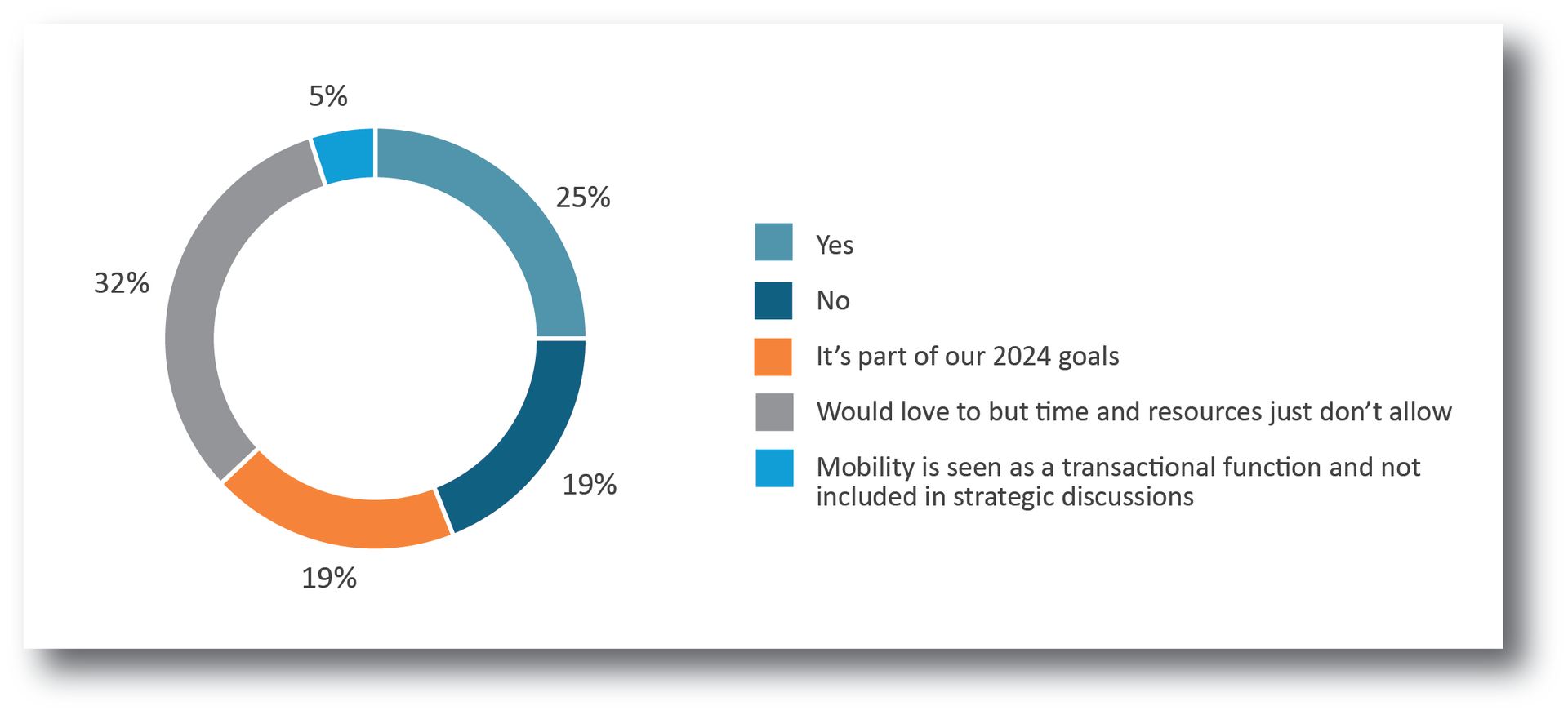
Mobility outcomes have a positive ROI on company succession planning, revenue, and growth. Yet, when asked whether their organization has assessed mobility’s value to the business, only 19% of webinar attendees shared that this would be a priority in 2024 — and a majority (32%) said that they’d love to promote this value within their organization, but time and resources wouldn’t allow for it.
“With so many market- and governmental -related demands on businesses today, it’s no surprise that businesses are struggling to keep up. Solutions need to be cost efficient, competitive, and compliant, but they also need to be able to flex as demands evolve. Mobility teams are a strategic partner in finding these solutions, in ways that align with company goals and have long-term benefits to the organization.” - Mark Nieuwendijk, Global Mobility Director of Danone
Mobility, as we know it, continues to evolve. But as it does, it’s increasing in both its importance and its ability to have a significant impact on organizational growth and revenue. With this in mind, it’s important to remember that total mobility isn’t a cost to a company; it’s an investment — with downstream benefits to the business. When a balance is struck between the mobile employee experience, strategic spending, goal-driven decision making, and long-term benefits to the business, mobility can be a strategic part of business planning and growth at a time when future planning has never been more crucial.
Share this post